Min order:
Capacity:
Loading Port:
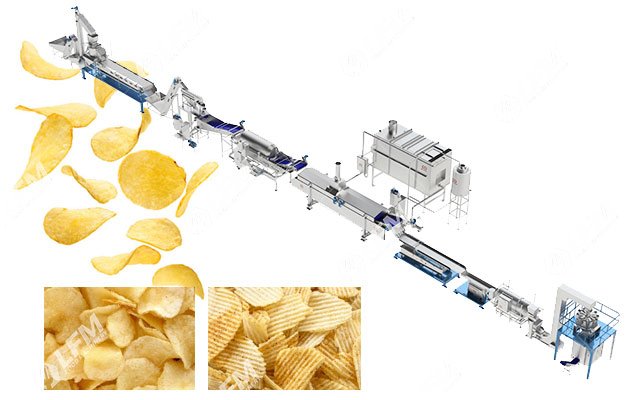
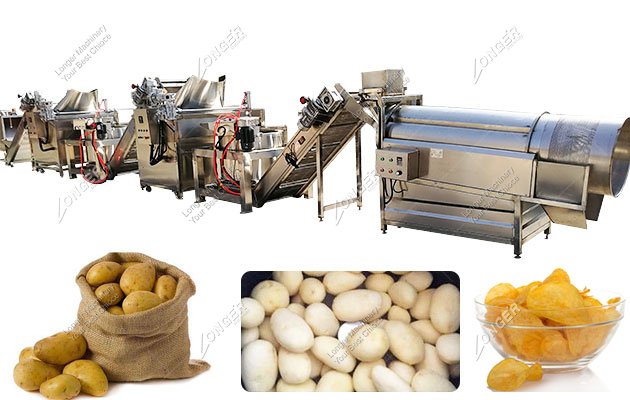
The automatic potato chips production line is designed for factories that process fresh potatoes into crispy, seasoned chips through a continuous production process. Depending on the required output and product specifications, the line can include potato washing, peeling, sorting, slicing, rinsing, blanching, dewatering, frying, deoiling, cooling, seasoning, conveying, and packaging.
Instead of operating each machine separately, the equipment is connected into one production system. This creates a continuous material flow from raw potatoes to finished chips while making it easier to manage slice thickness, frying conditions, moisture, oil content, and seasoning.
A typical potato chips processing flow is:
Fresh Potato Receiving → Washing → Peeling → Sorting → Slicing → Rinsing → Blanching → Dewatering → Frying → Deoiling → Cooling → Seasoning → Packaging
The actual configuration can be changed according to the potato variety, chip thickness, production capacity, frying method, seasoning formula, and packaging requirements.
Potato Washing, Peeling and Sorting
Fresh potatoes first enter the washing section to remove soil and other surface impurities. A potato peeling machine can be installed after washing when peeled potatoes are required for the following processes.
Sorting is normally arranged before slicing. Damaged, undersized, or unsuitable potatoes can be removed at this stage so the slicer receives more uniform raw material.
Potato Slicing and Rinsing
The prepared potatoes are cut into slices using an industrial potato chip slicer. Slice thickness is an important production parameter because it affects frying time, moisture removal, color, and final texture.
After slicing, the potato slices can be rinsed to remove excess starch from the surface. The washing method can be selected according to the desired appearance and processing requirements.
Blanching and Dewatering
Blanching can be added when pretreatment is required before frying. It is used as part of the preparation process to condition the potato slices before they enter the fryer.
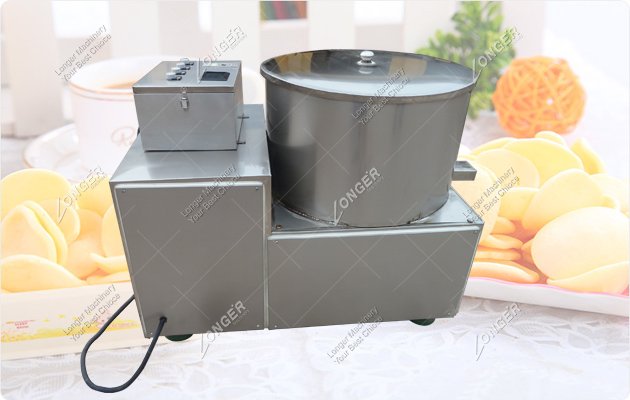
The slices then pass through a dewatering machine to remove surface water. Controlling the amount of water entering the fryer is important for maintaining stable frying conditions.
Continuous Potato Chip Frying
The frying section is one of the key parts of the production line. Potato slices are continuously fed into the fryer and cooked under controlled temperature and residence time.
The required frying conditions depend on slice thickness, raw material moisture, product loading, and the target finished texture. These factors need to be considered together when selecting the fryer and designing the production line.
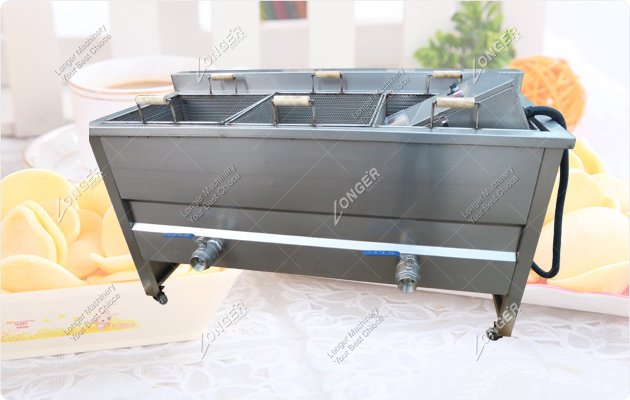
A continuous fryer can be configured according to the required throughput and heating method for different industrial production capacities.
Deoiling and Cooling
Freshly fried potato chips contain residual surface oil. A deoiling machine removes excess oil before the chips enter the seasoning section.
The chips are then transferred through a cooling conveyor or cooling system. The product temperature needs to be suitable for seasoning and packaging before it enters the downstream equipment.
Seasoning and Automatic Packaging
After cooling, the potato chips enter the seasoning machine. Salt, spices, or blended seasonings can be applied according to the product formula.
The seasoned chips can then be transferred to an automatic weighing and packing machine. The packaging system can be selected according to the required bag size, weighing range, sealing method, and production speed.
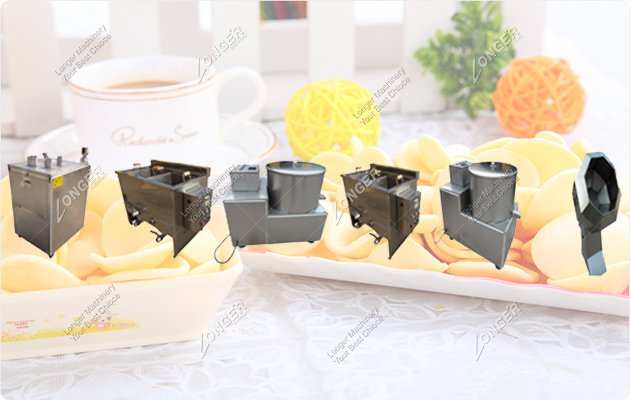
The equipment used in an industrial potato chips production line is selected according to the processing method and required output. A typical configuration may include the following:
| Processing Stage | Main Equipment |
|---|---|
| Raw potato washing | Potato washing machine |
| Potato peeling | Potato peeling machine |
| Sorting | Sorting conveyor |
| Slicing | Potato chip slicer |
| Slice rinsing | Potato slice washing machine |
| Blanching | Blanching machine |
| Dewatering | Potato dewatering machine |
| Frying | Continuous potato chip fryer |
| Deoiling | Oil removing machine |
| Cooling | Cooling conveyor |
| Seasoning | Potato chip seasoning machine |
| Conveying | Food-grade conveyor |
| Packaging | Automatic weighing and packing machine |
Not every factory requires every machine listed above. Blanching, for example, can be included when required by the selected process, while packaging equipment can be supplied separately when a factory already has a suitable packing system.
For an industrial potato chips plant, the final output depends on the capacity of the complete processing system rather than one individual machine.
Important factors include:
For example, increasing the capacity of the slicer does not necessarily increase finished production if the fryer has a lower throughput. The same issue can occur at the packaging stage if the packing machine cannot match the output from the seasoning section.
For this reason, the capacity of the major processing sections should be matched when designing the complete production line.
Different potato chip products can require different processing conditions. A line producing thin, crispy chips may use different settings from one producing thicker slices or a different finished texture.
Before selecting equipment, manufacturers normally need to confirm the following information:
Raw Material
Potato variety, raw material size, moisture content, and available supply.
Product Specification
Finished chip type, slice thickness, shape, texture, and seasoning requirements.
Production Capacity
Required fresh potato input or finished product output per hour.
Frying Method
Required fryer type, heating method, frying temperature, and residence time.
Packaging Format
Bag size, weighing range, sealing method, and required packaging speed.
Factory Conditions
Available production space, electrical supply, heating source, water supply, drainage, and other utilities.
These details are used to determine the equipment combination and production line layout. Factories that already have part of the processing system can also integrate selected sections instead of purchasing a completely new line.
The basic processing concept can also be adapted for other sliced fruit and vegetable snacks, including:
However, the processing parameters should be adjusted for each raw material. Differences in moisture content, sugar levels, starch, and tissue structure can affect slicing, pretreatment, frying, and seasoning.
For a new potato chips factory, equipment selection should start with the finished product and required output rather than simply choosing individual machines.
Product Specification → Required Capacity → Processing Method → Equipment Selection → Factory Layout → Packaging
A complete project may cover everything from potato preparation to final packaging. Another factory may already have a fryer, packaging machine, or other equipment and only require a new washing, slicing, seasoning, or conveying section.
The final production line can therefore be configured around the actual production requirements, factory space, utilities, and existing equipment.
What equipment is included in a potato chips production line?
A complete line may include potato washing, peeling, sorting, slicing, rinsing, blanching, dewatering, frying, deoiling, cooling, seasoning, conveying, and packaging equipment. The final configuration depends on the production process and target output.
What is the capacity of an automatic potato chips production line?
The production capacity depends on the complete line configuration, raw material, slice thickness, frying conditions, and finished product requirements. The equipment can be designed according to the required hourly output.
Can the line include a potato peeling machine?
Yes. A potato peeling machine can be installed in the raw material preparation section when peeled potatoes are required before slicing.
Can this line produce sweet potato or banana chips?
Yes. Similar equipment can be used for sweet potato, banana, plantain, and cassava chips. The slicing, pretreatment, and frying conditions need to be adjusted according to each raw material.
Can the potato chips production line be customized?
Yes. The equipment configuration can be adjusted according to production capacity, raw material, chip thickness, frying method, seasoning requirements, packaging format, factory layout, and available utilities.
An automatic potato chips production line connects potato preparation, slicing, pretreatment, frying, deoiling, cooling, seasoning, and packaging into a coordinated industrial process. The equipment can be configured around the required output and finished product specifications for different commercial potato chip manufacturing projects.
To select a suitable configuration, manufacturers can provide the target capacity, potato variety, chip thickness, frying method, seasoning requirements, and packaging format. These details can then be used to determine the processing equipment and production line layout.